
Table of Contents
- How to Verify Ancestral Property Title From Abroad
- Common Challenges and How to Address Them
- Sources
- Frequently Asked Questions
Last Updated: October 10, 2026
How to Verify Ancestral Property Title From Abroad
Verifying ancestral property title from abroad requires knowing which documents to request, which portals to search, and how to authorize a representative in India.
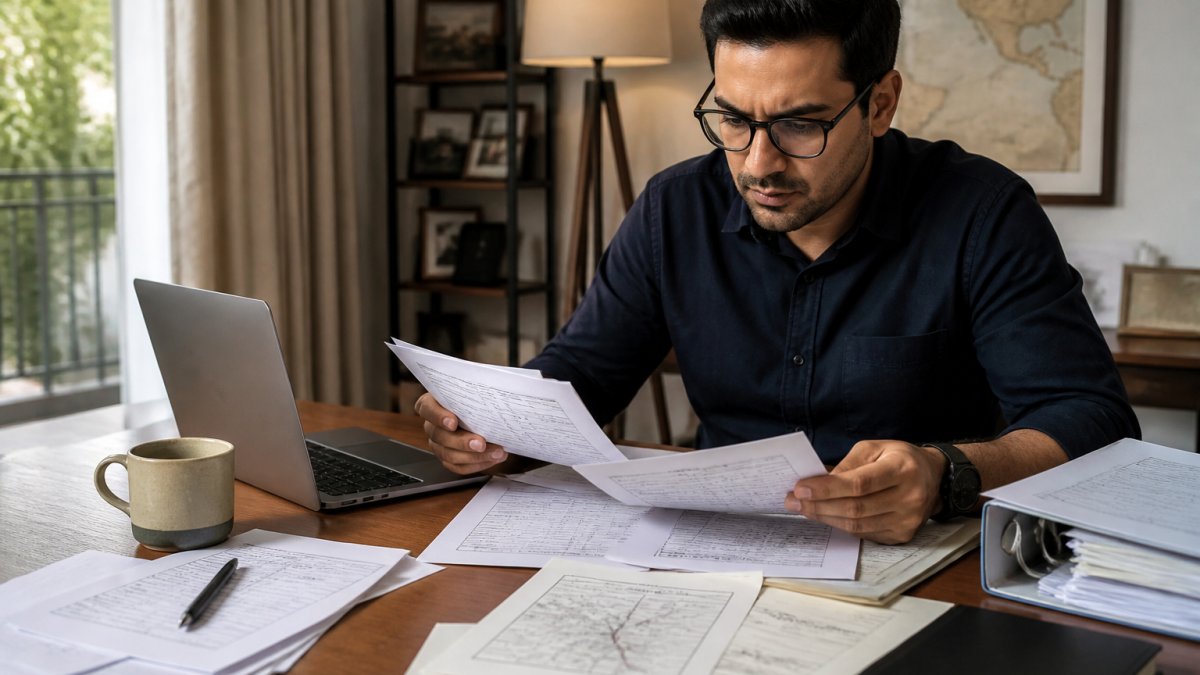
Title verification requires establishing the chain of title, checking for encumbrances, and confirming legal heirs through official portals or a representative in India.
Start with the title deed and ownership documents. Request certified copies of the original sale deed, gift deed, or inheritance document showing the property description, survey number, plot number, and all owners' names.
Trace the chain of title through your state's land registry. In West Bengal, access the Khatian record through the official state portal to verify your ancestor as the recorded owner; other states maintain similar online portals.
Request a mutation entry from the revenue department. A mutation records property transfers; request a certified copy showing transfers to your ancestor and subsequent owners to establish the chain.
Check for encumbrances and liens. Request an encumbrance certificate from the sub-registrar's office to confirm the property is free of mortgages, tax liens, or court orders that may affect your inheritance rights.
Confirm all co-owners and legal heirs. Collect death certificates, birth certificates, and succession certificates to establish each heir's legal claim.
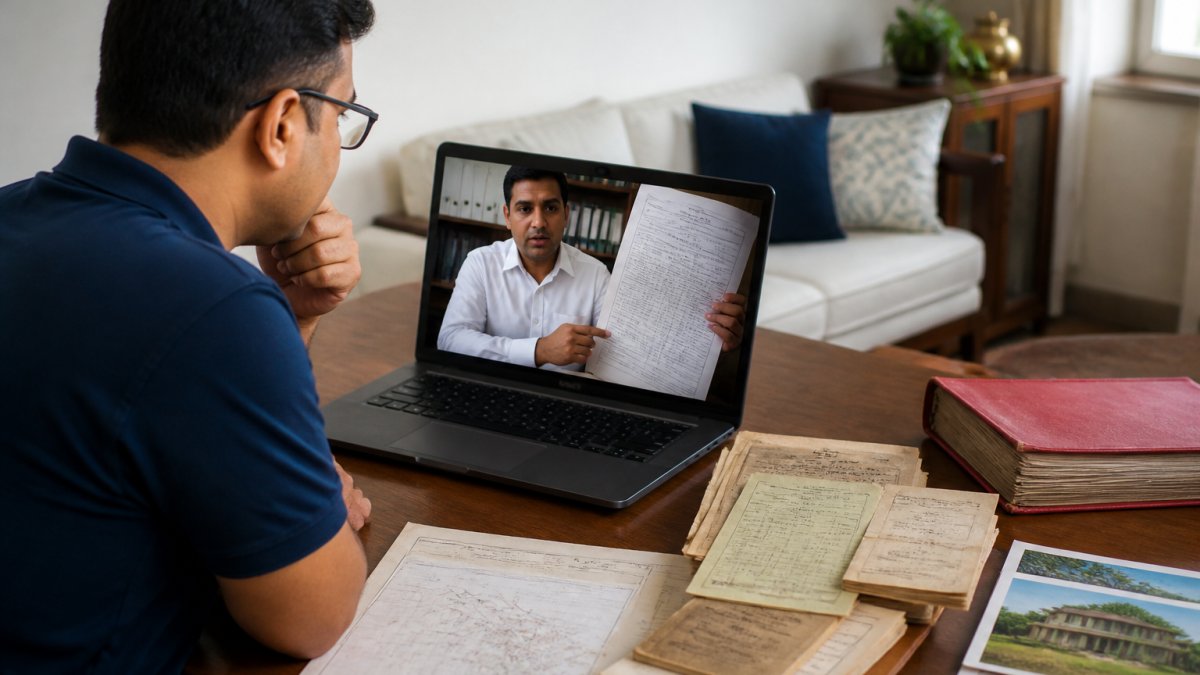
Authorize a representative through a Power of Attorney. You can authorize a trusted family member or legal representative in India to conduct searches and collect documents on your behalf.
Verify property details against official records. Cross-reference the survey number, plot number, and description from your title deed against land registry and revenue records, and resolve any mismatches in names or boundaries.
Common Challenges and How to Address Them
Incomplete or missing records. If original deeds are unavailable, request certified copies from the sub-registrar or revenue office.
Name variations in records. Collect documents showing variations and request the revenue office to issue a clarification.
Multiple heirs with competing claims. Consult inheritance law for your state to determine each heir's entitlement; a partition deed may be necessary to divide the property.
Difficulty accessing online portals. Contact the district revenue office directly if the portal is inaccessible.
Unresolved encumbrances. Investigate the validity of outstanding claims and determine whether they can be discharged.
The Ministry of External Affairs provides guidance for NRIs managing property in India. For complex title issues or disputes, professional assistance in verifying ancestral property title through remote representation can simplify the process. Title Search & Due Diligence and NRI Property Legal Services in India can help you establish clear ownership and resolve encumbrances from abroad.
Sources
Reserve Bank of India
Ministry of External Affairs, Government of India
West Bengal Land Records Online Portal
Informational only. Not legal advice. Governed by Bar Council of India Rules. No advocate-client relationship is created through this post.
Frequently Asked Questions
What documents do I need to prove ancestral property ownership?
To prove ancestral property ownership, gather the original title deed, sale agreement, inheritance certificate or succession documents, and revenue records showing your ancestors' names. If the property was inherited, collect heirship certificates or probate documents from the relevant court. Revenue department mutation entries that record ownership transfers between ancestors are also critical. Certified copies of these documents from the official authority strengthen your claim.
How do I trace the chain of title for inherited property?
Start with the oldest available title deed and work forward chronologically, documenting each ownership transfer through sale agreements, gifts, or inheritance records. Check revenue department records for mutation entries showing when ownership passed from one person to the next. For ancestral property, this chain typically begins with your earliest known ancestor and includes all intervening heirs. Online land portals and revenue offices can provide certified extracts showing the complete ownership history.
Can I check for encumbrances on ancestral property from abroad?
Yes. Access the land registry or revenue department portal for the state where the property is located to search for encumbrance certificates. These documents show whether the property is mortgaged, under litigation, or subject to liens. You can request certified encumbrance certificates online or through a Power of Attorney representative in India. Many state portals allow direct download of these certificates, making remote verification possible without traveling to India.