

Table of Contents
- NRI Legal Document Verification for India: How It Works
- Your NRI Property Legal Checklist India
- Power of Attorney for NRI in India
- NRI Document Attestation for India: Apostille and Consular Routes
- NRI Property Title Search India: What the Search Covers
- Remote Verification and Secure Handling
- Frequently Asked Questions
NRI Legal Document Verification for India: How It Works
NRI legal document verification for India confirms that papers issued, signed or filed abroad are genuine before an Indian authority will act on them.
Your NRI Property Legal Checklist India
Start with the land record, not the paperwork in your folder. A title search at the local sub-registrar's office shows who is recorded as owner and whether any charge, lien or mutation sits against the plot.
- Title search for the past thirty years where records allow
- Encumbrance certificate covering the period of ownership
- Latest property tax receipts in the seller's name
- Mutation entries matching the recorded owner
- Approved building plan and completion certificate, where relevant
In West Bengal, succession follows Dayabhaga law, which affects how ownership passes within a family and who can lawfully sell.
Power of Attorney for NRI in India
A Power of Attorney lets a trusted person in India sign, file and appear on your behalf. It must be executed abroad, notarized, then attested before it is accepted in India.
- Countries in the Hague Apostille Convention: get an apostille from the designated authority
- Countries outside it, including the United States: consular attestation at the Indian embassy or consulate
- Always: notarization first, then apostille or consular attestation
Draft the deed narrowly, naming the specific property, the specific powers and a clear expiry.
NRI Document Attestation for India: Apostille and Consular Routes
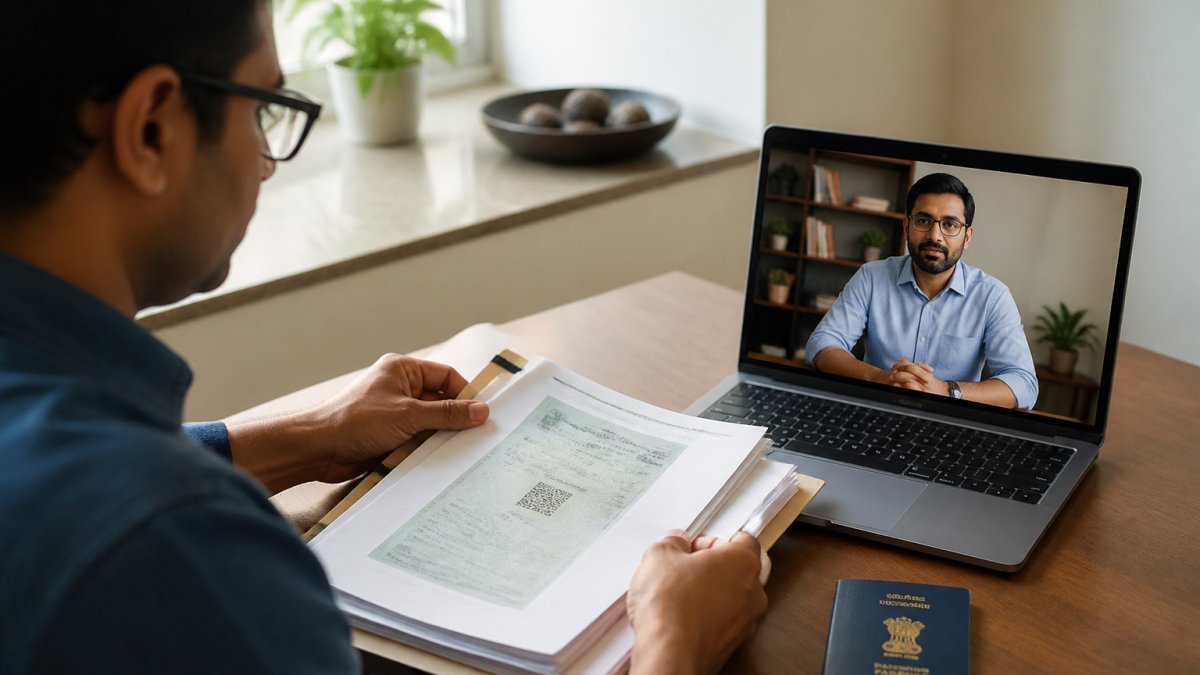
Attestation proves a document is genuine so an Indian authority will accept it. The right route depends on the issuing country and the document type, and the wrong one wastes weeks.
- Notarization: a notary confirms the signer's identity and witnesses the signature
- Apostille: a single stamp from the issuing country's designated authority, used between Hague Convention countries
- Consular attestation: the Indian embassy or consulate verifies the document, used where apostille does not apply
- Certified translation: a sworn translator renders the document into English, with the translation certified
Identity and address proof from the country of residence should travel with every packet: passport, visa, work permit or residence permit, and overseas address proof.
NRI Property Title Search India: What the Search Covers
A title search is an independent check of ownership records, not a review of the seller's folder. It confirms the chain of title, the seller's right to sell, and any claim against the property.
- Registered sale deeds across the chain of ownership
- Ownership records and mutation entries
- Encumbrance certificate for charges and liens
- Court records for pending litigation
- Property tax and utility dues
Ask for the search to be run at the registry, not supplied by the seller's agent.
Remote Verification and Secure Handling
Many NRI matters can be handled through a Power of Attorney, so most verification work happens without a flight to India.
- Share scanned copies over encrypted channels, never plain email attachments
- Keep originals with one trusted holder and log every handover
- Ask for registry receipts or search reports as proof of each step
IndusGuard's team can assist with title searches, attestation sequencing and Power of Attorney drafting for matters handled remotely. For property-specific work, the firm's NRI property legal services and title search and due diligence pages set out the scope, and its NRI legal services cover the wider range of cross-border matters.
Frequently Asked Questions
Can an NRI complete legal document verification from abroad?
Yes, in many situations. An NRI can have property documents, title records and registration papers reviewed in India through a Power of Attorney holder or a legal representative, without traveling. Documents signed abroad usually need notarization and then either apostille or consular attestation before Indian authorities accept them. Confirm the exact route with the authority that will receive the document, and keep certified translations ready where the original is not in English.
What documents should an NRI verify before buying property in India?
Check the chain of title through a title search, the land records and encumbrance position, the sale deed and registration details, property tax receipts, and the seller's identity and ownership proof. Where the property is inherited, review the Will, succession papers and probate position. Build these into your NRI property legal checklist India and have each item reviewed before any payment or signing.
Do documents signed outside India need attestation before use in India?
Usually yes. A Power of Attorney or affidavit signed abroad is typically notarized locally, then either apostilled by the designated authority in that country or attested at the Indian embassy or consulate, depending on the country and the receiving office. Rules differ by jurisdiction, so confirm the requirement with the office where the document will be used. IndusGuard's team can assist with NRI document attestation for India and related steps.