
Quick Summary
NRI divorce service of court papers in India requires the court to prove the spouse received proper notice through methods like diplomatic channels, international courier, newspaper publication, or in-person service. Indian courts accept service through the Hague Convention, where the receiving country's central authority handles delivery and returns a certificate confirming service occurred.
- Courts use diplomatic channels, international courier, newspaper publication, or local representatives to serve divorce papers to spouses abroad.
- Proof of service requires an affidavit from the process server, signed receipt, courier tracking, or a Hague Convention certificate.
- An NRI can respond to divorce papers through a Power of Attorney authorizing legal representation in India without traveling.
- If an NRI misses the response deadline, the court may proceed ex parte and grant the divorce without the defendant's input.
- Service through the Hague Convention can take several months, while courier service may take a few weeks.
Table of Contents
- Service of Divorce Summons in India for NRIs Abroad
- Proof of Service of Court Papers and What Courts Require
- Responding to Divorce Papers from India Without Traveling
- Frequently Asked Questions
Service of Divorce Summons in India for NRIs Abroad
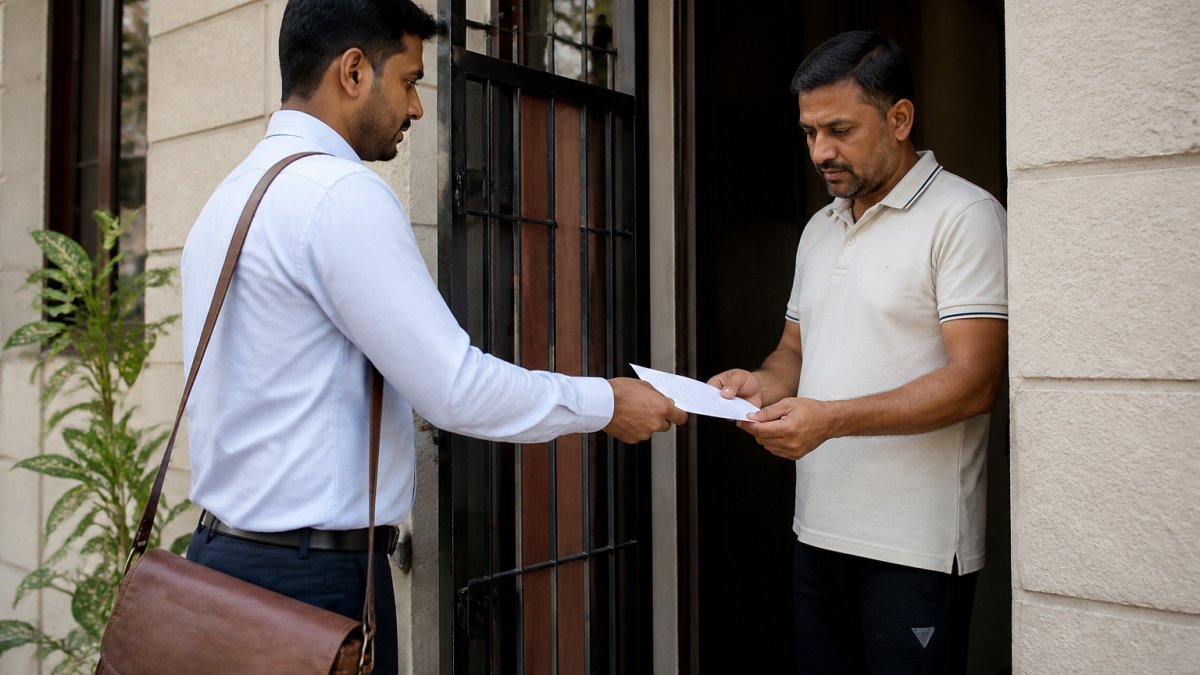
When an NRI faces divorce proceedings in India, the NRI divorce service of court papers in India is a critical hurdle. Learn how legal representation works alongside service of court papers in an NRI divorce. The court needs proof the spouse received proper notice before it proceeds.
Courts use several methods to reach a spouse abroad:
- Diplomatic channels via the Ministry of External Affairs
- International courier with proof of delivery
- Newspaper publication when the address is unknown
- A local representative serving papers in person
Proof of Service of Court Papers and What Courts Require
Proof of the NRI divorce service of court papers in India convinces an Indian court that the defendant received notice. Without it, the court will not hear arguments or pass a decree.
Courts require specific documentation:
- Affidavit from the person who served the papers, describing when and how delivery happened
- Receipt or acknowledgment signed by the recipient
- Courier tracking confirmation showing delivery to the correct address
- Certificate from the process server or court bailiff confirming service
- Newspaper publication certificates if service was by public notice
The burden of proving service falls on the petitioner. Understand jurisdiction, filing procedures and service of papers in the broader context of NRI divorce in India. When a spouse resides abroad, Indian courts accept service through the Hague Convention, where the receiving country's central authority handles delivery and returns a certificate proving service occurred.
Indian courts require specific documentation to confirm that an NRI defendant received proper notice of divorce proceedings.
| Documentation Type | Purpose |
|---|---|
| Affidavit from process server | Describes when and how delivery happened |
| Receipt or acknowledgment signed by recipient | Confirms the defendant received the papers |
| Courier tracking confirmation | Shows delivery to the correct address |
| Certificate from process server or court bailiff | Confirms service was completed |
| Newspaper publication certificates | Proves service by public notice when address unknown |
| Hague Convention certificate | Proves service occurred through receiving country's central authority |
Responding to Divorce Papers from India Without Traveling
An NRI who receives divorce papers from India does not automatically need to travel. Many manage proceedings through a Power of Attorney and video conferencing.
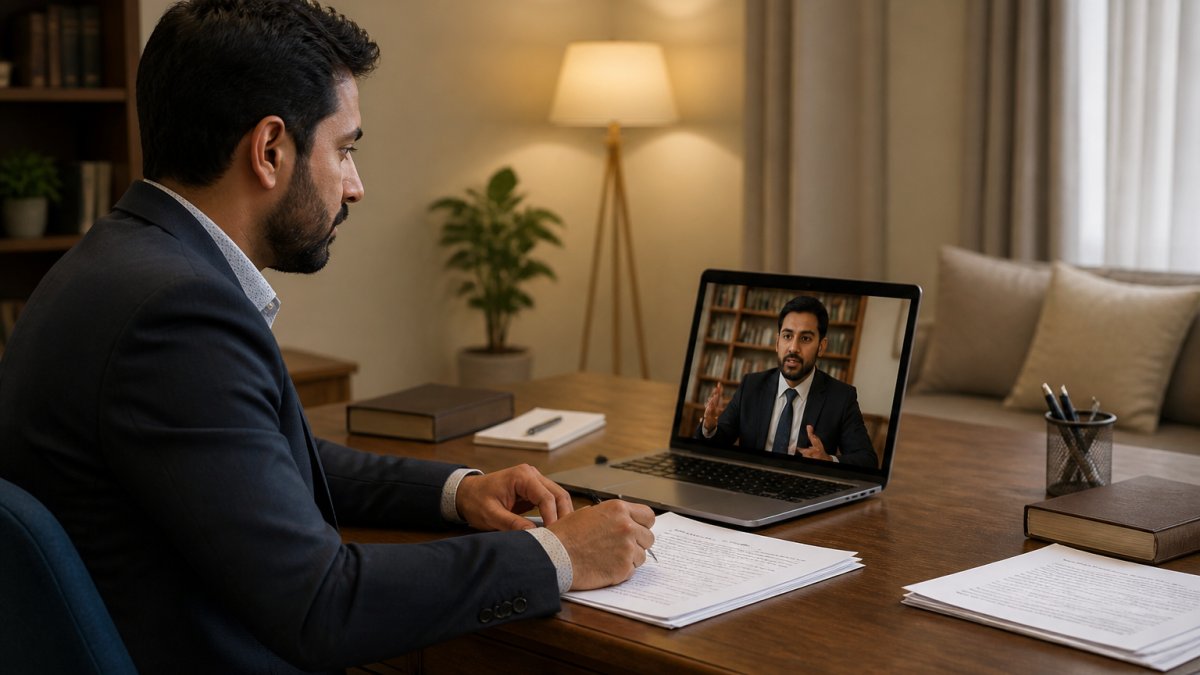
A Power of Attorney authorizes someone in India to act on the NRI's behalf, filing responses and attending hearings without the NRI being physically present. NRI legal services can handle remote participation and response to divorce proceedings on your behalf. Consulting with a lawyer experienced in Family Law, Matrimonial Disputes and Adoption Law can help ensure the Power of Attorney is properly drafted and all procedural steps are followed correctly.
Steps to respond to divorce papers from abroad:
- Consult an Indian lawyer immediately after receiving the summons
- Execute a Power of Attorney authorizing legal representation in India
- Provide relevant documents (marriage certificate, passport copies, proof of residence abroad)
- Instruct the lawyer to file a response within the court's deadline
- Attend hearings via video conferencing when the court permits
- Review all court orders and settlement proposals before the lawyer signs
If the NRI misses this deadline, the court may proceed ex parte and grant the divorce without the defendant's input.
Frequently Asked Questions
Can an NRI file for divorce in an Indian court?
Yes. An Indian court has jurisdiction if either spouse is domiciled in India or they last lived together there.
What is the difference between mutual consent and contested divorce?
In a mutual consent divorce, both spouses agree and sign a joint petition. In a contested divorce, one spouse opposes the petition and the court holds hearings before deciding.
How long does it take to serve papers to a spouse abroad?
Service through the Hague Convention can take several months. Courier service may take a few weeks.
What documents does an NRI need to file for divorce in India?
Essential documents include the marriage certificate, passport or visa pages showing overseas residence, proof of address abroad, and any documents related to children or property.
Can the court force an NRI to appear in person?
In rare cases, a court may summon an NRI to appear in person if the judge believes physical presence is necessary.
What happens if an NRI ignores divorce papers from India?
If an NRI fails to respond within the deadline, the court may proceed ex parte and grant the divorce based only on the petitioner's evidence.
Informational only. Not legal advice. Governed by Bar Council of India Rules. No advocate-client relationship is created through this post.
Frequently Asked Questions
How are NRI divorce court papers served when a spouse lives abroad?
Indian courts use multiple methods to serve divorce summons to an NRI spouse overseas. Papers may be sent by registered post to a known foreign address, delivered through the Ministry of External Affairs diplomatic channels, or served by a local representative at the NRI's last known address in India. The court records the method used and requires proof of delivery before proceeding with the case.
What proof of service of court papers does an Indian court accept?
Courts require an affidavit from the person who served the papers, confirming the date, time, and method of delivery. Registered post receipts, courier tracking confirmations, or a signed acknowledgment from the recipient all serve as valid proof. The court must be satisfied that the NRI spouse received actual notice or that service was attempted in good faith before a divorce decree can be issued.
Can an NRI respond to divorce proceedings in India through a Power of Attorney?
Yes. An NRI can authorize a Power of Attorney holder in India to file responses, attend court hearings, and take legal steps on their behalf. This avoids the need for the NRI to travel for most proceedings. The Power of Attorney must be properly executed and registered, and the court may still require the NRI's direct appearance or video testimony in certain situations, depending on the case complexity and the judge's discretion.
