
Table of Contents
- How NRIs Hold and Manage Ancestral Property Remotely
- Power of Attorney for NRI Property in India
- Essential Documents for Inherited Property in India
- Setting Up an NRI Property Caretaker Agreement
- Co-Heir Coordination and Joint Ownership
- Property Records, Taxes, and FEMA Compliance
- Sources
- Frequently Asked Questions
How NRIs Hold and Manage Ancestral Property Remotely
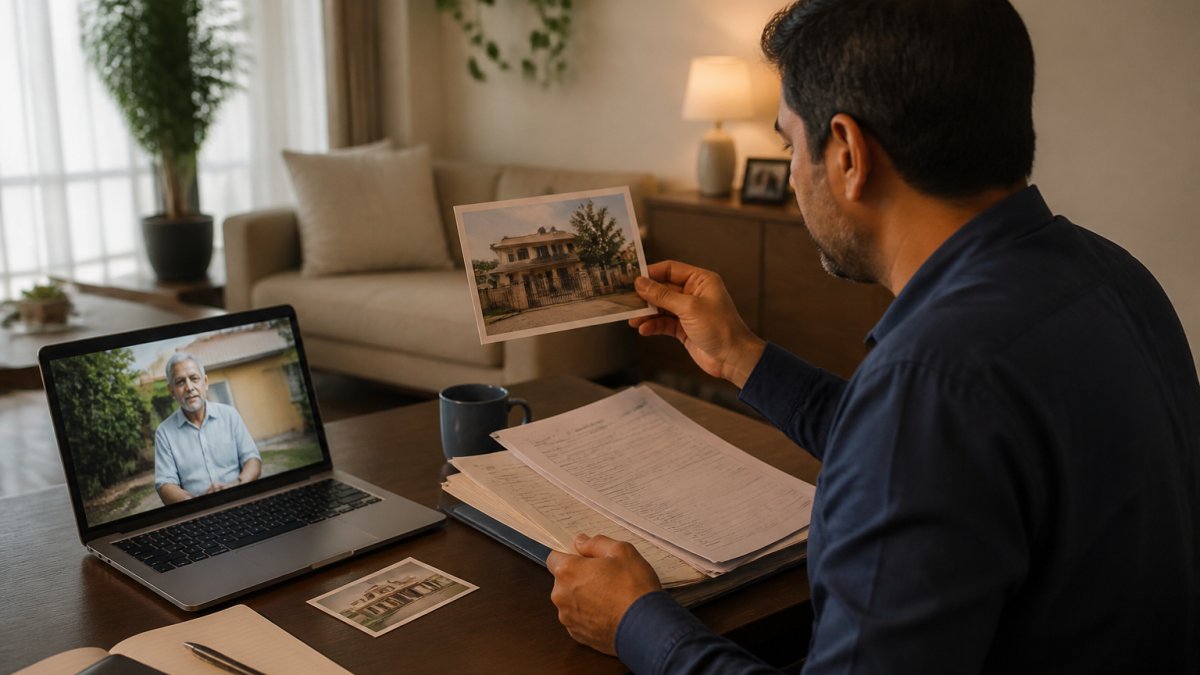
Managing Indian ancestral property from abroad requires clear legal authority and proper documentation.
Key steps for remote ownership:
- Register the property in your name after succession
- Appoint a trusted representative under a written Power of Attorney
- Keep ownership and rental income records clear and accessible
An NRI can hold ancestral property individually or as a co-heir, with joint ownership creating shared responsibility and decision-making.
Property records must show your current address and contact details.
Upkeep and tenant management from a distance are common challenges.
Remote management works best with reliable communication and clear written agreements about responsibilities.
Power of Attorney for NRI Property in India
Types of authority you can grant:
- General Power of Attorney covers all property and financial matters
- Special Power of Attorney limits authority to specific transactions like selling or leasing
- Limited Power of Attorney applies to a defined period or single transaction
The Attorney-in-Fact can sign documents, collect rent, pay taxes, and represent you in disputes for the matters you authorize.
Requirements for a valid Power of Attorney:
- Must be in writing and signed before a notary
- Requires consular attestation if you are outside India
- Should specify exact powers, limitations, and the Attorney-in-Fact's details
You can revoke the Power of Attorney at any time by written notice, and the Attorney-in-Fact must return the original when authority ends.
For NRI property management, a Power of Attorney is often combined with a caretaker agreement covering day-to-day maintenance and tenant relations.
Essential Documents for Inherited Property in India
Establishing your rights to ancestral property requires specific documentation, depending on whether the property passes through a Will or by intestate succession.
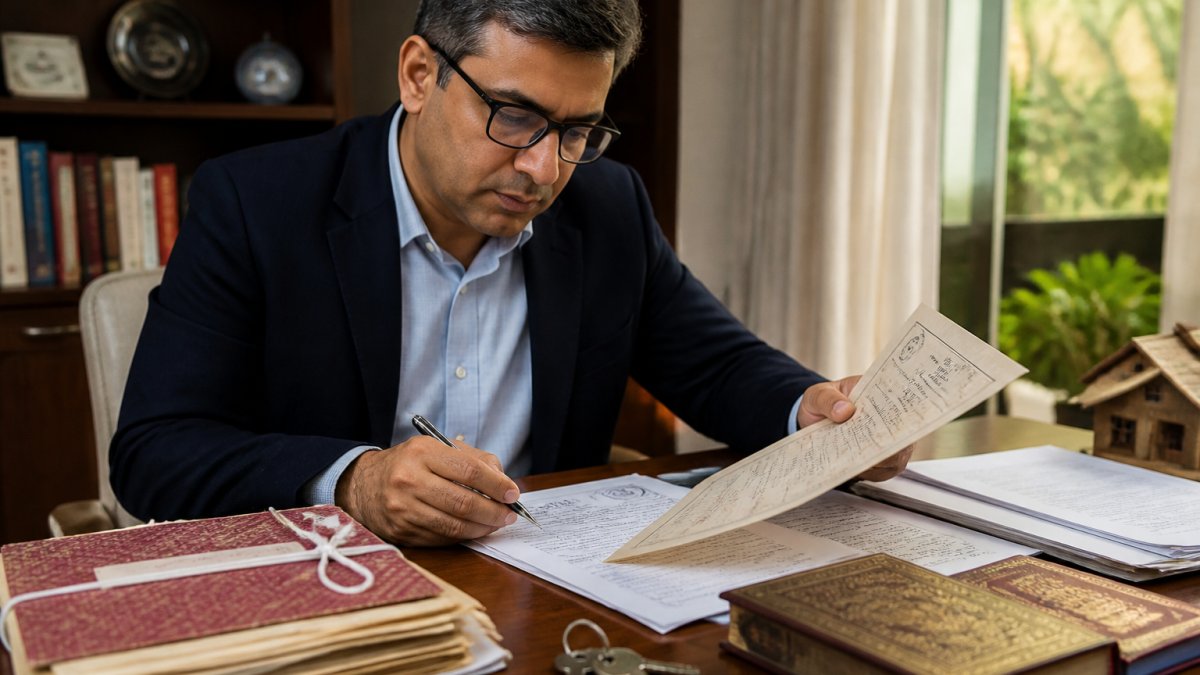
Documents to establish ownership:
- Death certificate of the deceased owner
- Original title deed or registration document
- Will, or succession certificate if no Will exists
A court issues a succession certificate to prove your legal right to inherit when there is no Will, and it is essential for transferring property into your name.
If a Will exists, probate may be required. This process confirms the Will's validity and your inheritance rights. Wills, Succession and Probate for NRIs in India provides information on the legal steps needed to establish ownership through either route.
Steps to document inherited property:
- Obtain a death certificate from the municipality
- Gather original property documents and titles
- Determine whether a succession certificate or probate is needed
Title verification confirms the property is free from disputes and encumbrances, protecting you from hidden claims. Title Search & Due Diligence provides information on establishing clear ownership before you take control of the property.
A representative in India can collect documents, file applications, and attend hearings on your behalf.
Setting Up an NRI Property Caretaker Agreement
What a caretaker agreement should cover:
- Maintenance duties and inspection frequency
- Rent collection and deposit procedures
- Tenant communication and lease enforcement
The caretaker may be a family member, trusted friend, or professional property manager, but must be reliable and have time for regular oversight.
Compensation terms should be specified in writing.
Protecting your property remotely:
- Require monthly or quarterly written reports
- Request periodic photos of property condition
- Monitor rental payments through direct bank transfers
A signed agreement reduces misunderstandings and provides legal recourse if disputes arise.
The caretaker should report tenant disputes immediately so you can decide whether to pursue eviction or settlement.
Co-heirs must agree on the caretaker's appointment and responsibilities, since joint ownership gives all co-heirs equal say.
Co-Heir Coordination and Joint Ownership
When ancestral property passes to multiple heirs, all become co-owners with equal rights.
Rights and responsibilities of co-heirs:
- Each co-heir owns an equal share unless the Will says otherwise
- All co-heirs must consent to major decisions like selling or leasing
- Each co-heir can use the property or claim a share of rental income
Partition divides the property among co-heirs, either physically if large enough or by sale with proceeds split equally.
Managing disagreements among co-heirs:
- Put all decisions in writing with signatures from all parties
- Designate one co-heir or professional to manage day-to-day affairs
- Establish a voting process for major decisions
A co-heir agreement clarifies how decisions are made and income is shared, preventing later conflict.
Some co-heirs may live abroad while others remain in India.
NRIs managing property with co-heirs in India face additional complexity.
Property Records, Taxes, and FEMA Compliance
Accurate property records are essential for NRI ownership.
Key records to maintain:
- Original sale deed or transfer document
- Property tax receipts from the municipality
- Rental agreements if the property is leased
Property tax must be paid annually to the local authority. Failure to pay results in penalties and may affect your ownership claim.
Rental income from ancestral property is taxable under Indian law regardless of your residency status.
FEMA considerations for NRIs:
- Rental income received in India can be repatriated abroad under FEMA rules
- Sale proceeds may be repatriated subject to certain conditions
- Consult current FEMA guidelines before moving money internationally
An NRI can hold property individually or jointly with family members in India, and the ownership structure affects tax treatment and repatriation options.
Coordinating with both an Indian tax advisor and your home country accountant helps prevent double taxation and ensures compliance. NRI Property Legal Services in India provides information on the legal framework for holding, managing and transferring ancestral property.
Sources
Reserve Bank of India (RBI) - FEMA guidelines and remittance rules for NRIs.
Ministry of External Affairs (MEA) - NRI registration and consular services.
Calcutta High Court - Probate and succession procedures for West Bengal property.
Informational only. Not legal advice. Governed by Bar Council of India Rules. No advocate-client relationship is created through this post.
Frequently Asked Questions
Can an NRI manage ancestral property in India from abroad without traveling?
Yes. NRIs can manage ancestral property remotely by appointing a Power of Attorney to act on their behalf. The Attorney can handle property maintenance, record updates, rent collection, and tenant disputes without requiring your physical presence. You retain full ownership and decision-making authority while your Attorney executes transactions and manages day-to-day matters in India. Regular communication and documented instructions ensure your interests are protected.
What documents should an NRI keep for inherited property in India?
Maintain copies of the death certificate of the previous owner, your identity documents, the original title deed or land records, succession or legal heir certificates, and any Will or probate order if applicable. Keep records of property tax payments, utility bills, and mutation certificates showing current ownership. Store digital copies in secure cloud storage and keep originals in a safe location. These documents prove your ownership claim and are essential for any future sale, transfer, or dispute resolution.
How should co-owners manage ancestral property in India?
Co-heirs should establish a written agreement defining each person's rights, responsibilities, and decision-making authority. Document how expenses will be shared, who collects rental income, and the process for major decisions like repairs or sale. If co-owners disagree on management, partition the property through legal channels or designate one co-owner or Attorney to manage it on behalf of all. Regular communication and clear documentation prevent misunderstandings and disputes later.